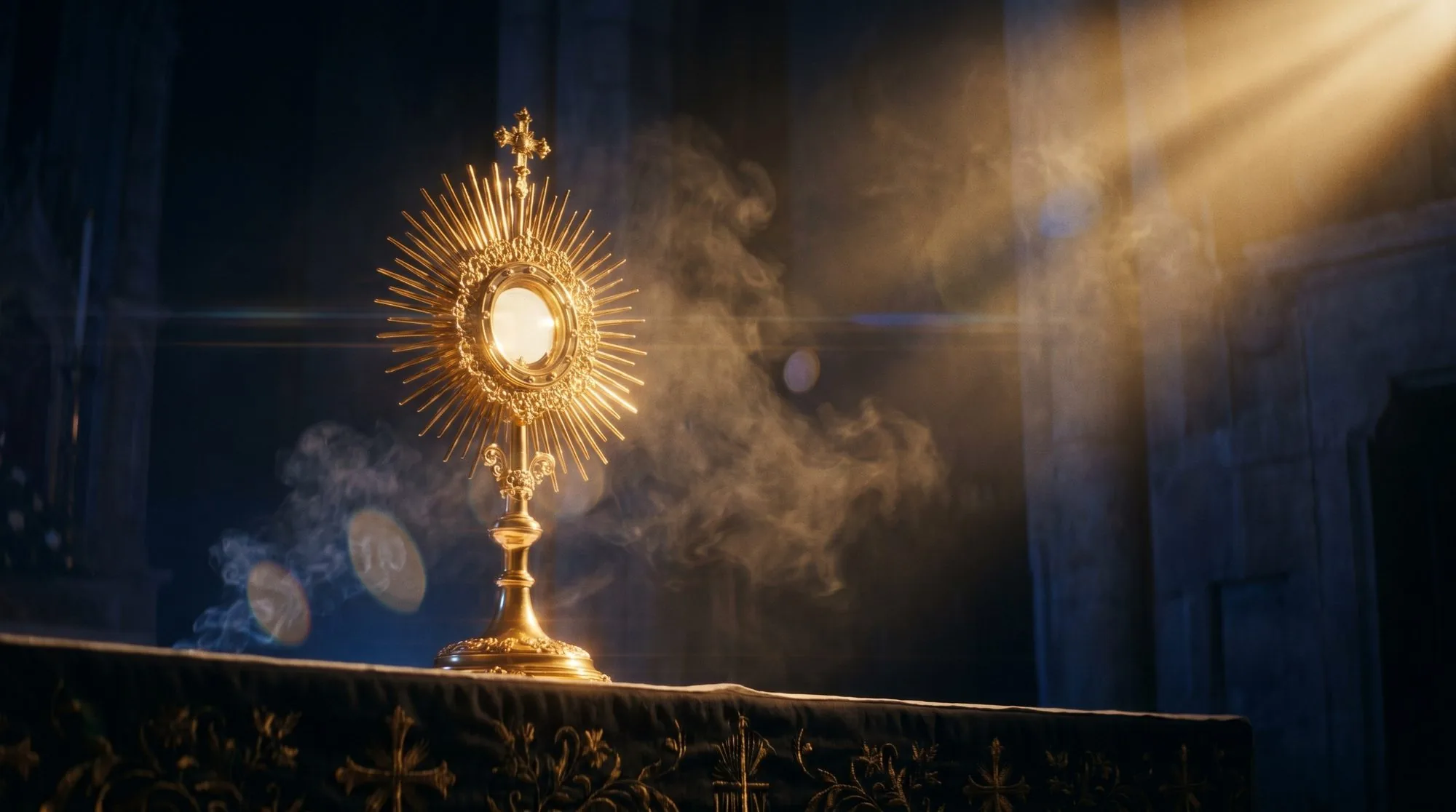
To a visitor, a Catholic Mass can feel like a code everyone else has memorized — when to stand, when to kneel, when a bell rings and heads bow. None of it is arbitrary. Underneath the choreography is a structure almost two thousand years old, and a claim about what is actually taking place. Here is the shape of it.
Two halves of one act
Every Mass has two great movements. The Liturgy of the Word is the table of Scripture: readings from the Old Testament, a Psalm, the letters of the apostles, and finally the Gospel, followed by the homily, the Creed, and prayers for the world. The Liturgy of the Eucharist is the table of the altar, where bread and wine are offered, consecrated, and received. Word and Sacrament — the Church has kept them joined since the beginning.
Not a performance, and not only a meal
This is the part most easily missed. The Mass is not a concert with a religious theme, nor merely a remembrance dinner. The Church believes it is the one sacrifice of Christ on Calvary made present again — not repeated, but re-presented, so that what happened once for all is offered here and now. It is also a meal: the Lord's Supper, where the faithful receive what the Church holds to be the very Body and Blood of Christ. Sacrifice and supper, at once.
The Eucharist is the source and summit of the Christian life.Catechism, 1324
Why all the standing and kneeling
The body prays along with the soul. The congregation stands for the Gospel and the great prayers — the ancient posture of respect and readiness. It sits to listen, as students before a teacher. It kneels at the heart of the Eucharistic Prayer, when the Church believes Christ becomes present on the altar — the instinct of awe before something holy. Follow the room until the rhythm becomes your own; nobody minds a newcomer a beat behind.
How old is this?
Older than most people guess. Around the year 155, a Christian named Justin Martyr wrote to a Roman emperor describing what believers did on Sundays: they gathered, read the memoirs of the apostles and the writings of the prophets, heard a sermon, prayed, and shared bread and wine over which thanks was given. Strip away the centuries and it is recognizably the same service a Catholic attends this weekend. The Mass is not something the Church invented recently; it is something the Church has been doing without interruption.
A word about Communion
Visitors are genuinely welcome — to come, to sit, to pray, to take it in. One gentle note: Catholics reserve the reception of Communion for those in full communion with the Church and rightly disposed — not as a snub, but because receiving says, with the body, I believe what this is, and I belong to this. If that is not yet you, you are warmly invited to come forward for a blessing instead, arms crossed over your chest, or simply to remain and pray. No one is unwelcome at the door.
What to take from it
If you go, do not worry about getting every gesture right. Watch for the center of it: the moment the bells ring and the room goes to its knees. Everything before it is preparation; everything after it is thanksgiving. That is what actually happens at Mass — heaven and earth, the Church believes, meeting for a few minutes over a small table of stone.
Sources: Catechism of the Catholic Church, 1324, 1346–1355, 1373–1377; Luke 22:14–20; Justin Martyr, First Apology (c. 155).